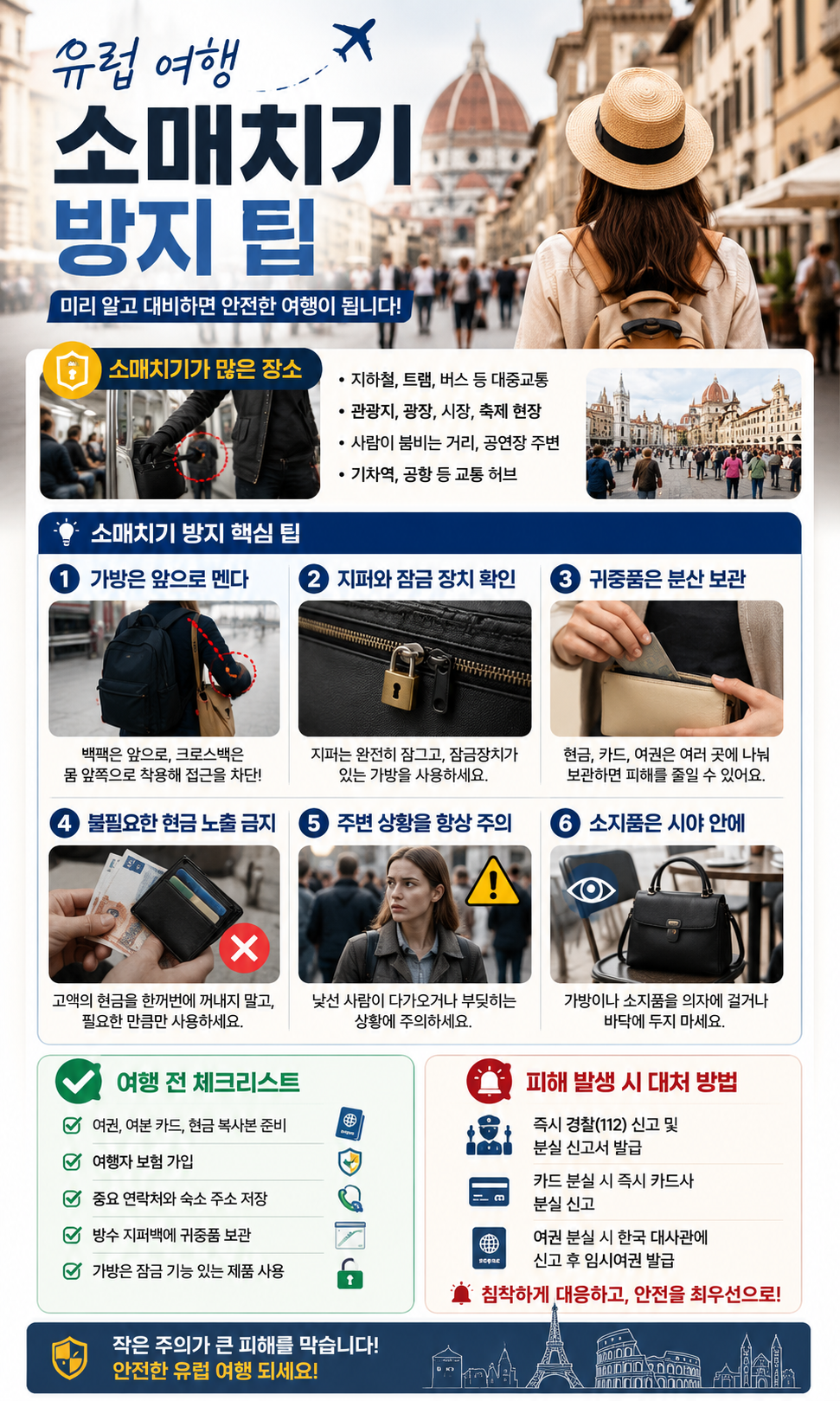
유럽 여행을 준비하면서 많은 여행객이 걱정하는 것 중 하나가 바로 소매치기입니다.
특히 관광객이 많이 몰리는 유럽의 주요 도시에서는 복잡한 대중교통이나 유명 관광지에서 여행객을 노리는 경우가 있어 주의가 필요합니다.
소매치기를 예방하는 가장 좋은 방법은 귀중품을 눈에 띄게 보관하지 않고 항상 몸 가까이 두는 것입니다.
조금만 습관을 바꿔도 위험을 크게 줄일 수 있습니다.
1. 여권과 현금을 한곳에 보관하지 않기
여권, 현금, 신용카드 등을 하나의 지갑이나 가방에 모두 넣어두면 가방을 잃어버렸을 때 피해가 커질 수 있습니다.
여권은 안전한 곳에 보관하고, 현금과 카드는 여러 곳에 나누어 보관하는 것이 좋습니다.
여행 중 사용할 현금만 소량씩 가지고 다니는 것도 좋은 방법입니다.
2. 뒷주머니에 지갑을 넣지 않기
바지 뒷주머니는 소매치기의 표적이 되기 쉽습니다.
특히 지하철이나 버스처럼 사람이 밀집한 곳에서는 자신도 모르게 지갑을 잃어버릴 수 있습니다.
지갑이나 스마트폰은 가급적 잠금장치가 있는 가방 안쪽이나 앞쪽 주머니에 넣는 것이 안전합니다.
3. 백팩은 사람이 많은 곳에서 특히 주의하기
여행 중 편리한 백팩도 사람이 많은 장소에서는 주의해야 합니다.
지하철이나 관광지처럼 혼잡한 곳에서는 백팩을 뒤로 메기보다 앞으로 돌려서 몸 앞쪽에 두는 것이 좋습니다.
가방의 지퍼가 쉽게 열리지 않도록 잠금장치를 활용하는 것도 도움이 됩니다.
4. 스마트폰을 길에서 오래 들고 다니지 않기
여행 중 길을 찾거나 사진을 찍느라 스마트폰을 계속 손에 들고 다니는 경우가 많습니다.
하지만 사람이 많은 거리나 대중교통 주변에서는 스마트폰을 잠시 꺼내 확인한 뒤 바로 가방에 넣는 습관을 들이는 것이 좋습니다.
길을 확인할 때는 사람이 적고 안전한 장소에서 잠시 멈춰 지도를 확인하는 것이 더욱 안전합니다.
5. 지하철과 기차에서 특히 주의하기
유럽 여행에서 소매치기를 조심해야 하는 대표적인 장소가 대중교통입니다.
승하차할 때 사람이 갑자기 몰리거나, 누군가 부자연스럽게 몸을 밀착시키는 상황에서는 가방과 귀중품을 확인하는 것이 좋습니다.
열차 안에서는 가방을 바닥이나 좌석에서 멀리 떨어뜨려 놓기보다 자신의 시야와 손이 닿는 곳에 두는 것이 안전합니다.
6. 낯선 사람의 갑작스러운 접근에 주의하기
길에서 갑자기 말을 걸거나 옷에 무언가 묻었다고 알려주는 등 여행객의 시선을 다른 곳으로 돌린 뒤 물건을 가져가는 방식도 있을 수 있습니다.
물론 모든 친절한 도움을 의심할 필요는 없지만, 갑작스럽게 주변의 관심을 끄는 상황이 발생하면 먼저 자신의 가방과 휴대폰, 지갑부터 확인하는 습관을 갖는 것이 좋습니다.
7. 식당과 카페에서도 방심하지 않기
관광 중 잠시 쉬는 식당이나 카페에서도 가방을 의자 뒤에 걸어두는 것은 피하는 것이 좋습니다. 가방은 가능한 한 몸 가까이에 두고, 휴대폰이나 지갑을 테이블 위에 장시간 올려놓지 않는 것이 안전합니다.
특히 야외 테라스에서는 가방을 발밑이나 의자에 걸어두기보다 직접 관리하는 것이 좋습니다.
8. 숙소에서도 귀중품 관리하기
여행지에서 외출할 때 모든 현금과 카드를 가지고 나갈 필요는 없습니다.
숙소에서 제공하는 금고가 있다면 여권이나 사용하지 않는 귀중품을 안전하게 보관하는 방법을 고려할 수 있습니다.
다만 숙소의 보안 수준과 금고 사용법을 확인하고 중요한 물품을 한곳에만 보관하지 않는 것이 좋습니다.
9. 여행 전 카드와 스마트폰 보안 설정하기
소매치기는 물건 자체를 잃어버리는 것뿐만 아니라 카드나 스마트폰이 악용되는 문제로 이어질 수 있습니다.
여행 전 카드사의 해외 사용 설정과 분실 신고 방법을 확인하고, 스마트폰에는 화면 잠금과 생체 인증을 설정해 두는 것이 좋습니다. 중요한 계정에는 2단계 인증을 사용하는 것도 도움이 됩니다.
10. 가장 중요한 것은 '방심하지 않는 습관'
소매치기 예방에서 가장 중요한 것은 비싼 장비를 준비하는 것보다 여행 중 귀중품의 위치를 항상 의식하는 습관입니다.
관광지에서 사진을 찍거나 주변 풍경에 집중할 때도 가방의 지퍼가 닫혀 있는지 확인하고, 대중교통을 이용할 때는
휴대폰과 지갑의 위치를 확인하는 습관을 들여보세요.
유럽 여행은 지나치게 불안해하기보다 기본적인 안전수칙을 지키면서 즐기는 것이 중요합니다.
귀중품을 분산 보관하고, 사람이 많은 곳에서는 가방을 몸 앞으로 두며, 갑작스러운 접근이나 혼잡한 상황에서
한 번 더 주변을 살피는 것만으로도 소매치기 위험을 줄이는 데 도움이 됩니다.
유럽 여행을 떠나기 전에는 방문할 국가의 최신 여행안전정보와 긴급 연락처도 미리 확인해
두면 더욱 안심하고 여행할 수 있습니다.
아래 글도 같이 참고하세요.
유럽 자유여행 환전 이렇게 하면 돈 아낍니다! 꼭 알아야 할 7가지
유럽 여행을 준비할 때 항공권과 숙소만큼 중요한 것이 바로 환전입니다. 조금만 신경 써도 환전 수수료를 줄이고 여행 경비를 아낄 수 있습니다. 특히 유럽은 국가마다 사용하는 화폐가 다를
c0mp.tistory.com
'여행-맛집' 카테고리의 다른 글
| 일본 이자카야 바가지 씌우는 경우와 현명한 대응방법 (0) | 2026.08.18 |
|---|---|
| 제주도 비행기값 싸게 사는법 5가지|항공권 저렴하게 구매하는 실전 팁 (0) | 2026.08.18 |
| 삿포로 여행에서 꼭 먹어야 할 음식 추천! 현지에서 놓치면 아쉬운 별미 총정리 (0) | 2026.08.18 |
| 당일치기부터 1박 2일까지! 경상도 KTX 여행 코스 추천 5곳 (0) | 2026.08.17 |
| 항공권부터 숙박까지! 100만원으로 가능한 해외여행 추천 (0) | 2026.08.15 |